
FORCED PIPE MANUFACTURE
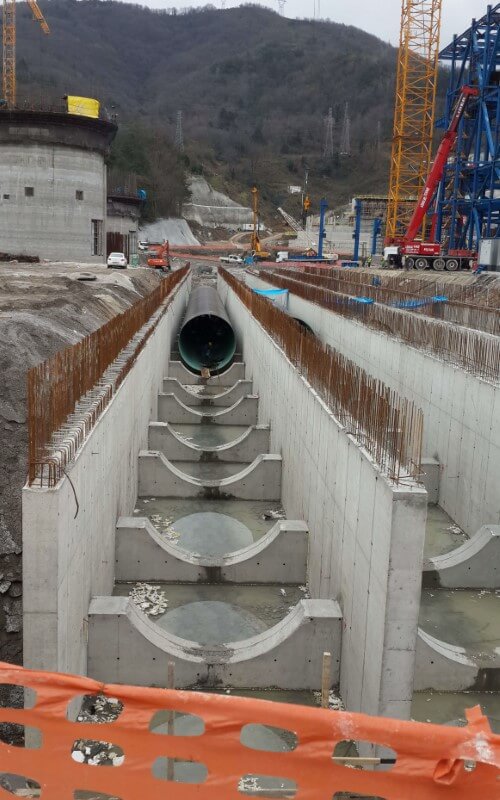
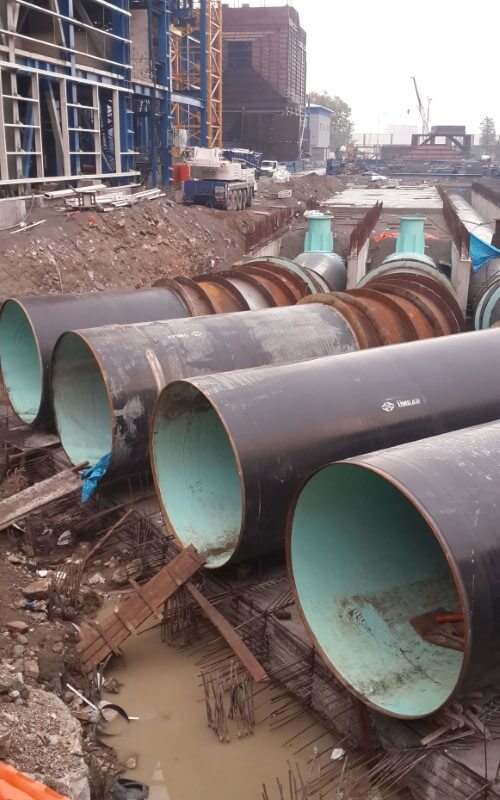
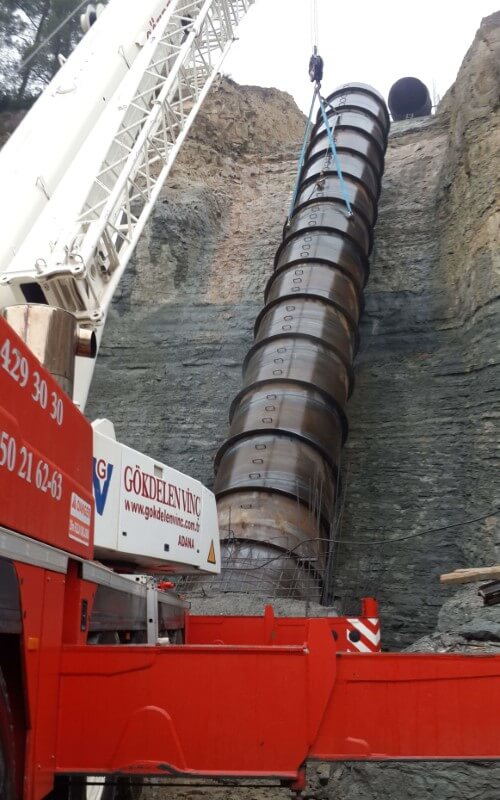
Forced pipe manufacturing ensures the transportation of water taken from the reservoir to its intended use location, such as drinking, irrigation, and energy production, in dam and/or hydroelectric power plant (HPP) facilities.
The forced pipes, detailed in the projects for their purpose, location, and conditions (horizontal, vertical, inclined, etc.) whether on supports in open areas or tunnels, or as steel cladding in tunnels, are produced with appropriate welding edges and methods. The straight pipes and accessories listed below are manufactured with welding techniques suitable for environmental and longitudinal weld joints.
What is Forced Pipe?
Forced pipe manufacturing ensures the transportation of water taken from the reservoir to its intended use location, such as drinking, irrigation, and energy production, in dam and/or hydroelectric power plant (HPP) facilities.
Forced Pipe Manufacturing
As SETA ÇELİK, within the scope of forced pipe manufacturing, we provide long-term solutions to our valued customers with our services including the preparation of forced pipe projects and calculations, material procurement, transportation of materials to our factory, quality control of incoming materials, preparation from raw materials to intermediate products, manufacturing, destructive and non-destructive material and weld inspections, workshop and site painting, transportation and protection at the site, installation, delivery in working condition, preparation of operation and maintenance manuals, and spare parts.
Parts of Forced Pipe Manufacturing
The forced pipe manufacturing consists of the following main parts within the general description:
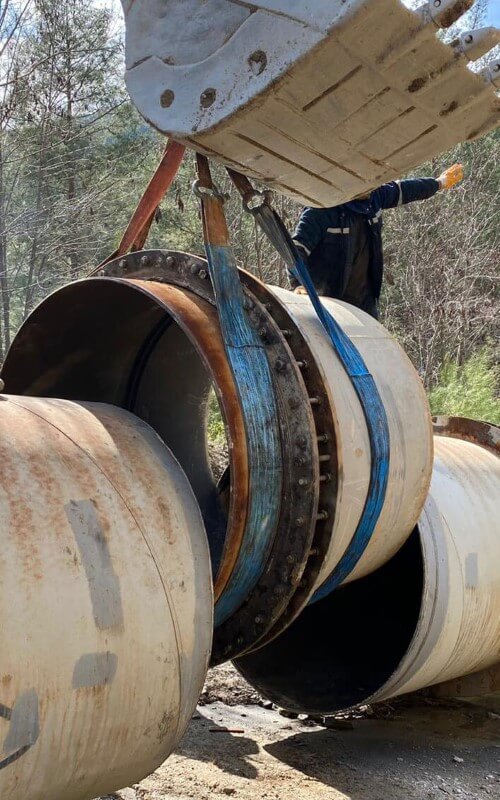
- Straight pipe sections
- Transitions
- Reductions
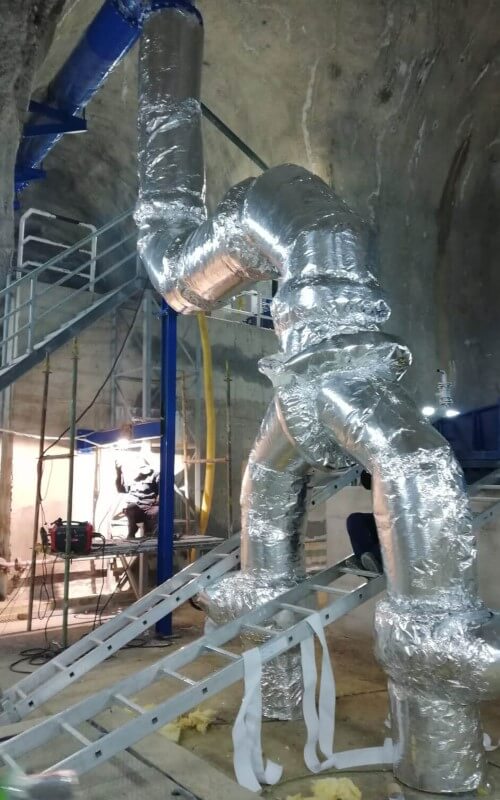
- Elbows
- Branches
- Supports (fixed and sliding)
- Surge shafts and chambers
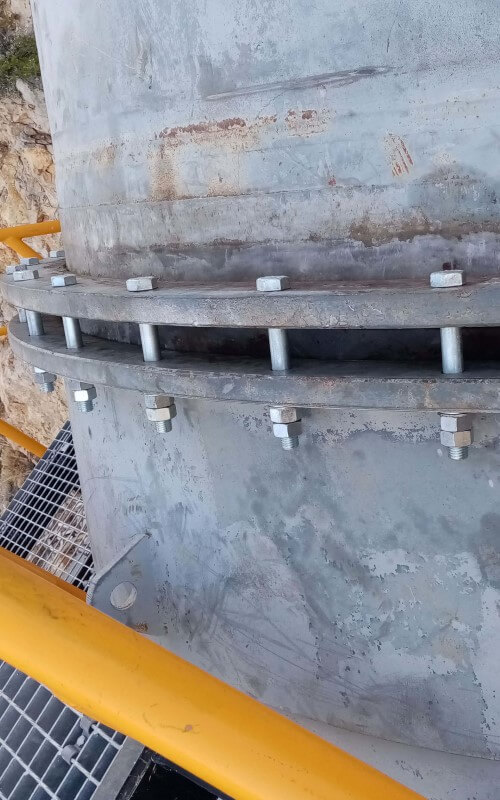
- Expansion joints
- Flexible joints
- Manholes
- Drainage pipes and valves
- Ventilation pipes and valves
- Reinforcement rings
- Injection holes
- Test caps and plugs
- Movable working platforms
The manufacturing of forced pipes includes not only straight pipes but also various accessories mentioned above. The straight pipe sections are shaped by rolling the material regardless of the type of material to be used, with appropriate welding edges at environmental and longitudinal weld joints, and manufactured using suitable welding methods and joint shapes.
SETA ÇELİK, with years of experience and expertise in dam and HPP manufacturing and installation, will provide the best service to our valued investors and operators.
Material Control in Forced Pipe Manufacturing
The steel material used for manufacturing forced pipes is guaranteed by factory certificates. These certificates and/or material certificates reveal the material content through spectral analysis and chemical inspections. Additionally, these documents verify that the material meets the required standards for manufacturing. Forced pipe manufacturing will not commence with steel material lacking a factory guarantee certificate or test report.
All plates with a thickness of t=20 mm and above will be subjected to a lamination (layer) test before being purchased for forced pipe manufacturing.
Weld Control in Forced Pipe Manufacturing
After forced pipe manufacturing, 50% of the circumferential and longitudinal welds and 100% of the longitudinal weld joints will be inspected using X-RAY (or Gamma-Ray) methods. After repairing any detected faulty welds, the same area will be re-inspected 100%.
Before starting the manufacturing of forced pipes, projects specify which types of inspections will be performed on the welds. Areas where radiographic inspection is not possible will be subject to ultrasonic testing (UT) in accordance with relevant regulations. All results of destructive and non-destructive tests on the forced pipes will be presented in report form for approval by the customer or authority.
Post-Manufacturing Cleaning and Painting Procedures
After the manufacturing and weld inspections of the forced pipes are completed, all mechanical cleaning of the pipes must be done, and the internal and external surfaces must be painted according to the relevant specifications and standards. Key considerations include marking and avoiding painting areas where fixed and sliding supports will be placed during field installation, and ensuring that pipe ends are protected from painting and only painted after welding and local cleaning at the site.
After the manufacturing of forced pipes, they will be transported to the construction site and proceed to the installation phase with the experience and assurance of SETA ÇELİK.