
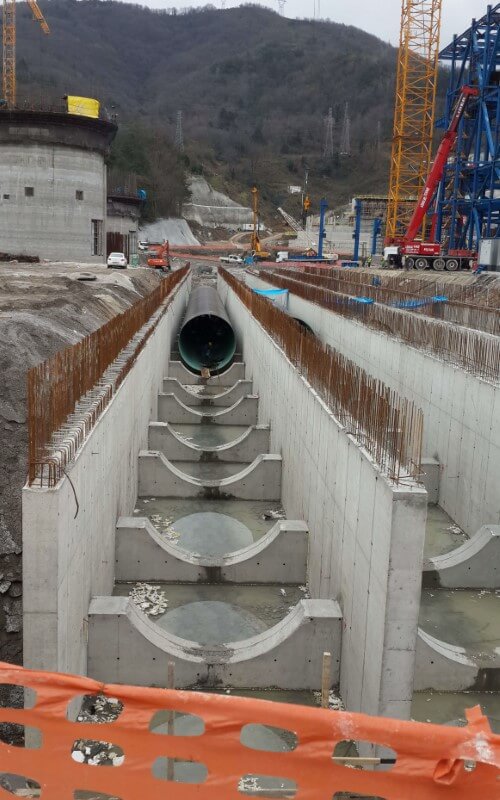
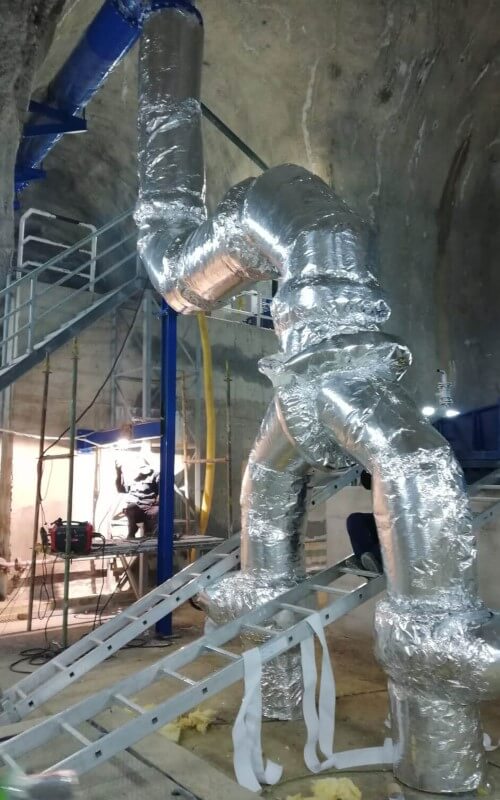
Expansion Gaskets Assembly and Disassembly
Expansion joints are used to prevent any deformation and excessive stress in the forced pipe axis due to thermal expansion and contraction caused by temperature changes or external loads. They also ensure leak-proofing during these displacements. At SETA ÇELİK, we are ready to provide you with unlimited service in the installation and removal of expansion joints, leveraging our field experience accumulated over the years.
How Should Expansion Joints Be Manufactured?
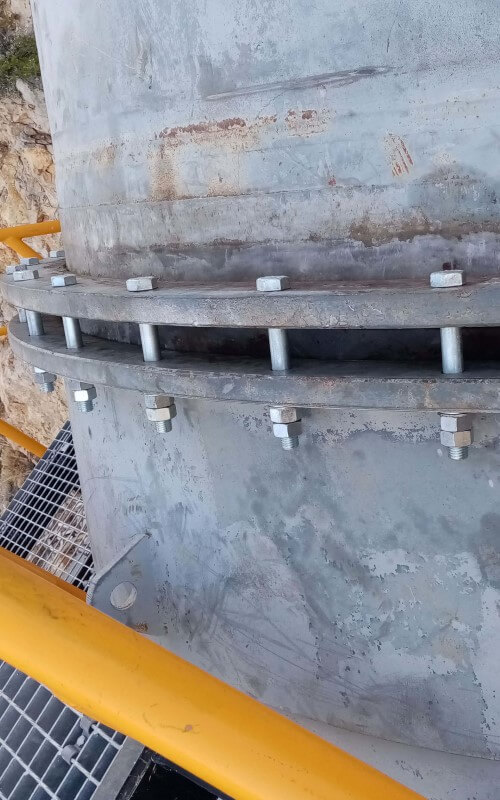
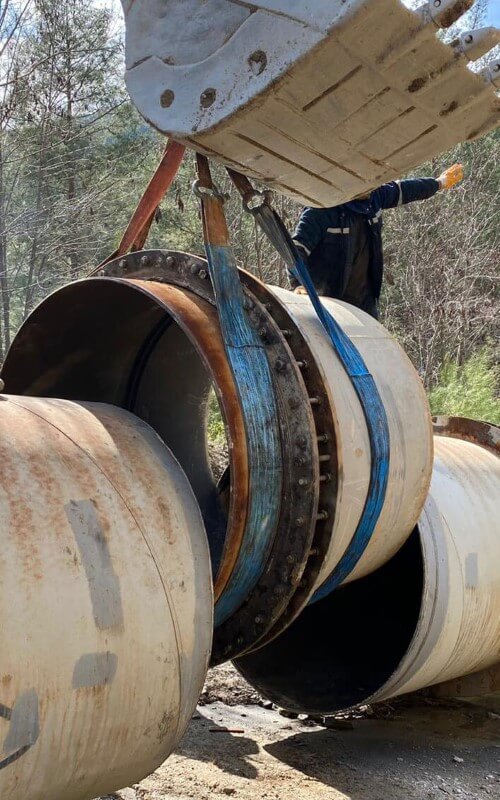
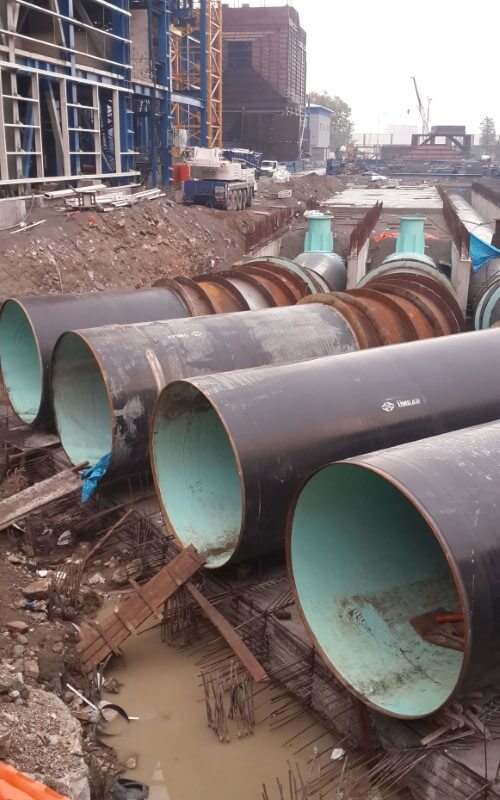
For the installation and removal of expansion joints, the inlet and outlet pipes to be manufactured should have the same internal diameter as the forced pipe. The wall thickness of these pipes will be determined according to the calculations made. The gasket, which is the most crucial component of the expansion joint sealing system, should be made from PTFE-based braided material. During the movement of the gasket due to the expansion and contraction of the forced pipe, the pipe surface it will move on should be covered with stainless steel. At least four layers of gasket should be wrapped around the stainless steel surface, and to allow for installation and removal, the outer sleeve flange should have removal bolts.
Installation and Removal of Expansion Joints
In sliding joint type expansion joints, a stopper ring piece will be placed at the midpoint on the inner side of the sleeve. For forced pipes with a slope of less than 12°, the installation and removal of expansion joints will be performed at the midpoint of the forced pipe between two fixed supports. If the slope exceeds 12°, the installation and removal of expansion joints will be done closest to the outlet side of the fixed support (or elbow mounting kit, etc.). To account for possible disruptions and potential project errors during the installation and removal of expansion joints, the inlet pipe will be kept 200 mm longer than the project length.
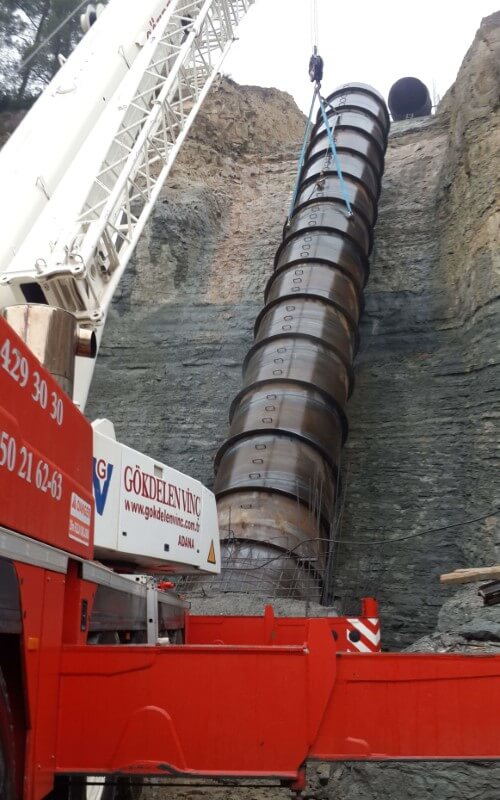
The connection elements (such as bolts, nuts, studs, washers) used for the installation and removal of expansion joints should be made of stainless steel. For low-slope forced pipes, a ladder will be constructed on the expansion joints for access to bolts. For high-slope forced pipes, working platforms will be constructed for the installation and removal of expansion joints. If only axial changes are expected in the forced pipe, sliding type expansion joints will be preferred; if vertical changes, even minor, are also expected, sliding joint type expansion joints will be used. In a high-slope (≥ 30°) forced pipe, to prevent vertical settling due to the weight of the joint, the joint will be bolted to the forced pipe in the inlet direction, and a spherical bearing will be used in the bolt connection.
After the installation and removal of expansion joints, no water leakage will be allowed. For the best results in expansion joint installation and removal, you can contact SETA ÇELİK.